
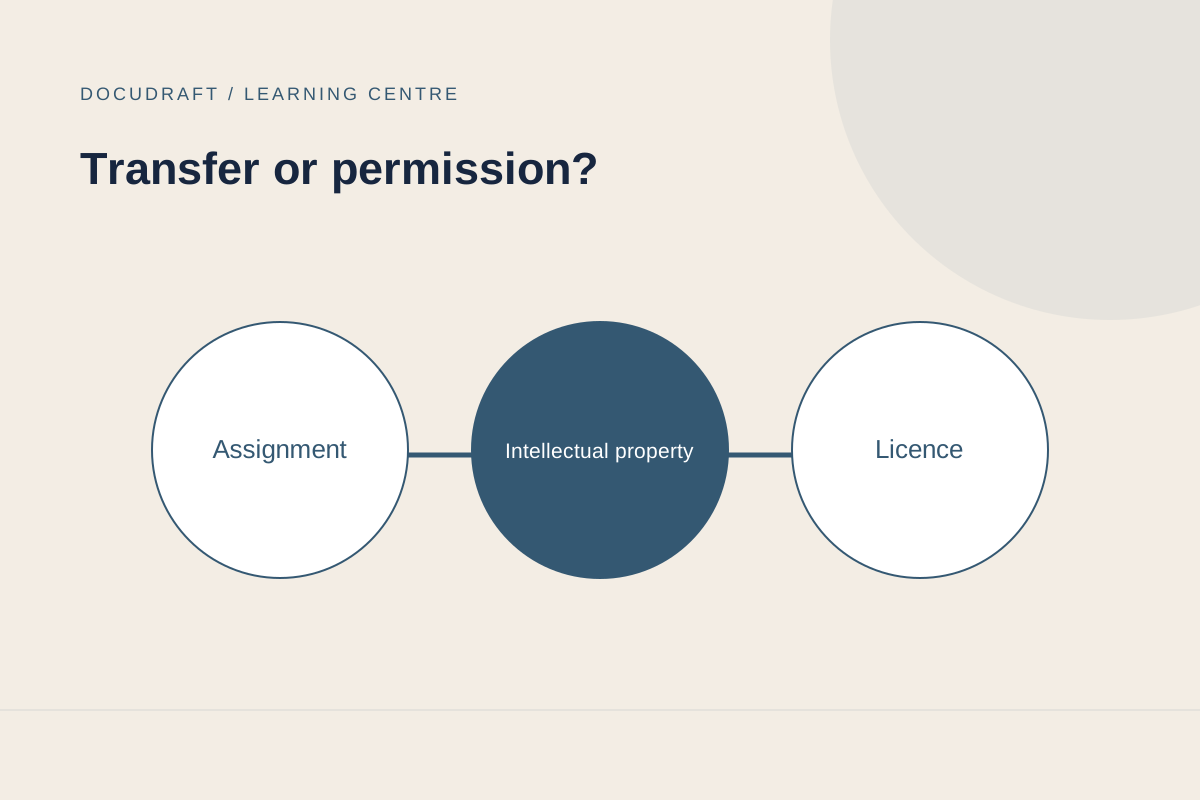
Paying for creative work and owning the rights in it are different questions. Before buying a website, commissioning software or transferring a brand, establish what is being supplied and what permission or ownership you will receive.
An assignment transfers ownership of specified rights. A licence grants permission to use rights on agreed terms. Neither label, by itself, tells you whether the arrangement covers every asset your business needs.
Establish who owns the work
The Intellectual Property Office explains that creators usually own copyright initially, with an important exception for relevant works made by employees in the course of employment, subject to agreement. Commissioning work does not automatically give the customer ownership. Read the IPO's copyright ownership guidance.
Ask who created each element, what their engagement said and whether earlier transfers exist. A business might control the website account while a contractor owns code, a designer owns artwork and a stock provider licenses photographs. One signature from the business may not address all of those rights.
Build an asset and rights schedule
| Asset | Evidence to request | Practical handover |
|---|---|---|
| Logo and design | Creator contracts, assignments and third-party elements | Editable source files and relevant specifications |
| Website | Development terms, content rights and software licences | Hosting, administrator access and backups |
| Software | Contributor terms and dependency licences | Source repositories, documentation and build access |
| Trade mark | Registration details, owner and existing licences | Required record changes and renewal information |
| Domain name | Registrant details and registrar requirements | Registrar transfer, DNS and renewal control |
Choose ownership or permission deliberately
If a licence is proposed, ask about the permitted uses, territory, duration, exclusivity, changes, sublicensing and termination. If an assignment is proposed, define the rights, works and exclusions precisely. Ask whether existing customer licences or other commitments continue and whether third-party consent is required.
The IPO explains that a copyright assignment needs a written, signed transfer document. It also distinguishes moral rights: these cannot be assigned, although they can be waived. See licensing or selling copyright. Other intellectual property rights have their own requirements; do not treat a copyright form as a universal IP transfer.
A website handover example
Imagine buying a small online business. The seller supplies an administrator password and says “the website is yours”. You still need to establish rights to the content and code, transfer the domain, arrange hosting access and understand any software subscriptions. Customer information raises separate data-protection questions.
Turn the handover into an agreed list of deliverables. For each item, record the person responsible, the required evidence and how completion will be confirmed. Keep sensitive access information out of general transaction trackers.
Watch for gaps between legal and technical delivery
A signed assignment can leave you unable to operate the asset if the source files are missing. Conversely, possessing files does not establish the right to use them. Check both sides of the handover before describing it as complete.
Ask a specialist about unclear ownership, disputed rights, open-source obligations, overseas rights, existing security or restrictions in customer and supplier contracts. Those issues may need more than a standard transfer document.
Choose the document by the asset
The IP and commercial contracts topic separates copyright, website, software, logo, trade mark and domain transfers. Compare the actual scope of the relevant product. If the transfer is part of buying a business, include the rights schedule in your acquisition preparation and discuss it with your transaction solicitor.
Sources and further reading
- Intellectual Property Office: copyright ownership
- Intellectual Property Office: licensing and selling copyright
General information for England and Wales. Your circumstances may require legal, tax, financial or other professional advice.
Your next practical step.
Check the contents and scope of the documents relevant to this topic.

Copyright transfer agreement
Record a transfer of copyright, identify the work being transferred and check the permissions and handover steps involved.
See contents and suitability
Website transfer agreement
Put a website transfer in writing, with a record of what changes hands and the permissions and practical steps to check.
See contents and suitability