
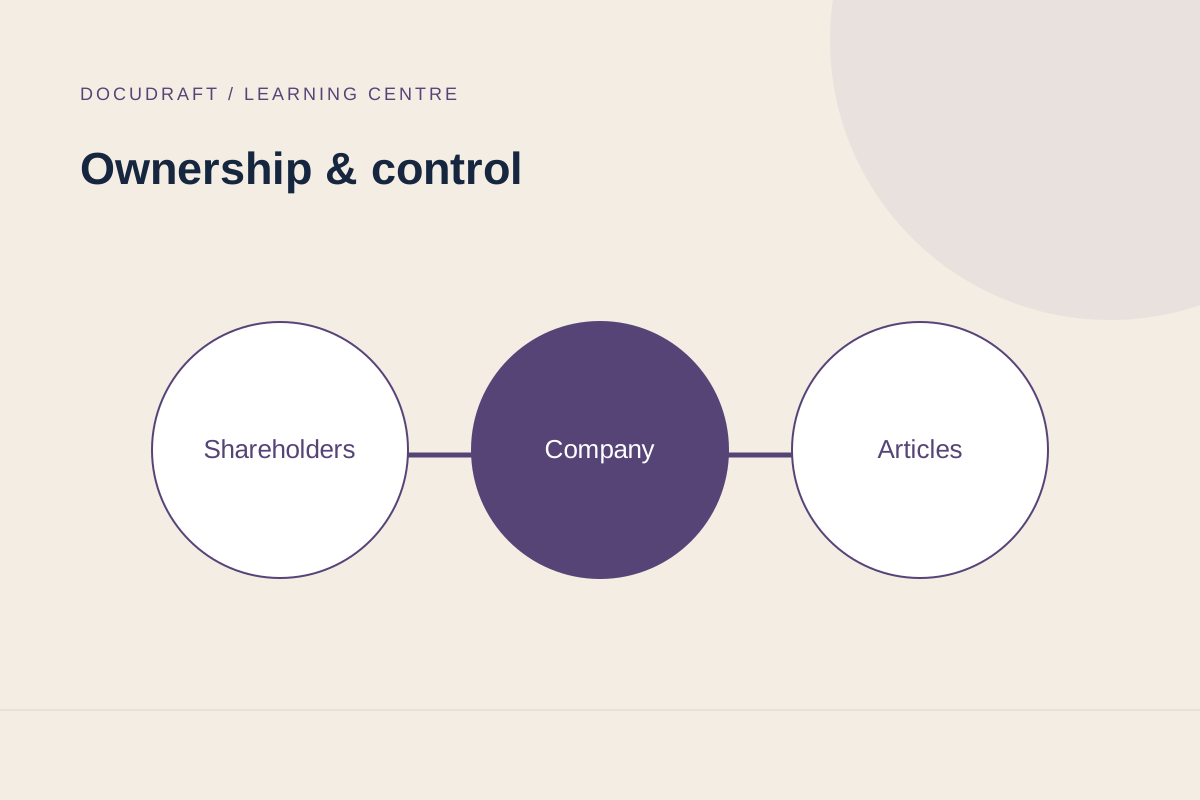
A shareholders agreement and a company's articles address related questions, but they are not interchangeable. Founders need a coherent set of arrangements for ownership, decisions and change. Choosing two documents independently can leave important provisions working against one another.
Before discussing clauses, agree what the business needs to cope with: new funding, a founder leaving, disagreement over a sale, or someone wanting to transfer shares.
What the articles do
The articles are the company's constitutional rulebook. Companies House explains that every company must have articles and that they bind the company and its members. They address matters including directors' and shareholders' decisions and shares. Companies may use model articles, amend them or adopt bespoke articles. See the official incorporation guidance.
Model articles provide a starting framework. Do not assume they record every commercial understanding between founders simply because they were suitable for incorporation.
What a shareholders agreement adds
A shareholders agreement records contractual arrangements between its parties. In practice, founders often use it to address commitments, information, funding, decisions requiring consent and what should happen when relationships change. Its scope depends on the actual drafting and who signs it.
The practical question is not which document is “better”. Ask which provisions belong in each document, which people must be bound and how future shareholders will join the arrangements. A new shareholder should not be assumed to have signed a contract merely by acquiring shares.
Build a decision brief before choosing wording
- Ownership: who contributes cash, existing assets or work, and what shares are proposed?
- Management: who runs the business day to day, and how are directors appointed?
- Reserved decisions: which matters need additional consent, and whose consent?
- Funding: what happens if the business needs more money and one founder cannot contribute?
- Information: what financial and operating information should owners receive?
- Departure: what should happen if someone stops working, dies or wants to sell?
- Deadlock: what happens if the agreed decision process produces no decision?
Test the arrangements against a realistic disagreement
Imagine two equal shareholders. One wants to accept an investor's offer; the other thinks the valuation is too low. “We will agree everything together” does not resolve that situation. Consider what information is needed, whether a discussion or mediation stage helps, which decisions can continue in the meantime and whether an exit mechanism is appropriate.
A forced sale or buy-out mechanism can have very different effects on founders with different financial resources. Ask an adviser to test the proposed process, rather than treating a familiar clause heading as evidence that the outcome will be fair.
Read the documents together
Make a comparison schedule for board composition, voting, share transfers, new shares and departures. Identify where the same subject appears twice. Ask how any inconsistency is dealt with and whether the intended arrangements are valid and workable. Include employment, consultancy, IP and loan documents where they affect a founder's position.
If the articles need changing, GOV.UK explains the shareholder approval and filing process. It specifies deadlines for sending the resolution and amended articles to Companies House. Your adviser should confirm the steps for the particular change; see changing articles of association.
What to prepare now
Collect the current articles, share records, existing agreements and a short summary of the intended ownership arrangement. Mark unresolved commercial decisions clearly. The shareholders agreement product page explains the proposed document's scope. You can also explore founder and business-owner documents and the company records checklist.
Sources and further reading
General information for England and Wales. Your circumstances may require legal, tax, financial or other professional advice.
Your next practical step.
Check the contents and scope of the documents relevant to this topic.

Board Minutes Approving a Contract
Record the board’s consideration and approval of a proposed company contract.
£12.95 · View pack
Shareholders agreement
Put the relationship between your shareholders in writing, with a clear starting point for the company and its ownership arrangements.
See contents and suitability